
Exterior Roller Shutters, Venetian Blinds & ZIP Screens:
The Complete US Buying Guide
Three systems. One goal: stop solar heat before it enters your home. This guide covers every ROMA product type available through meylen.com — profiles, box systems, US cost, and the solar motor upgrade that means no electrician, no wiring, no wall damage.
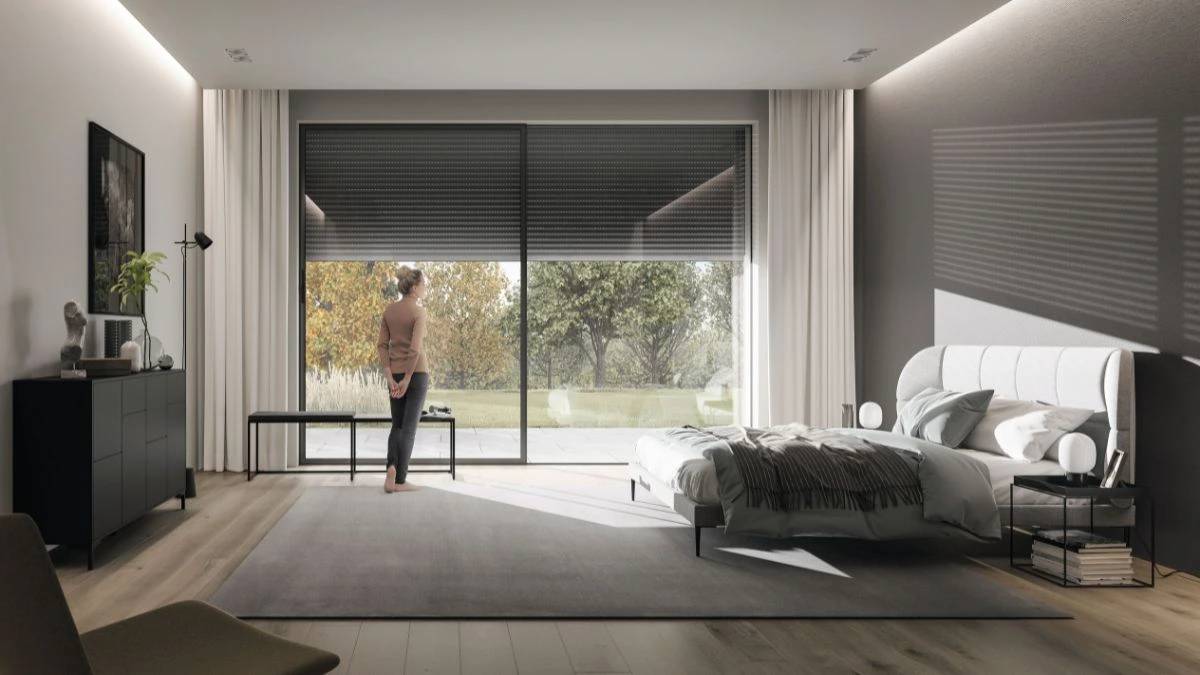
ROMA Rollladen on a residential facade. © ROMA / meylen.com
| System | Best for | Blackout | View through | Wind limit | US cost / window |
|---|---|---|---|---|---|
| Rollladen | Bedrooms, security, storm zones | 100% | None when closed | 75+ mph | $800–$2,000 |
| Raffstore | Living rooms, offices, large glass | ~85% | Yes (slat-angled) | 35–50 mph | $1,200–$2,500 |
| ZIP Screen | Terraces, panoramic windows, patios | ~70% | Yes (one-way) | 75 mph (zip-locked) | $900–$1,800 |
🛡️ 1. Rollladen — The Roller Shutter
The Rollladen is the bedrock of German residential architecture. Found on over 60% of German homes, it is a curtain of interlocking aluminum or PVC slats that rolls down from a box above the window to form a solid barrier. When fully closed: complete blackout, no drafts, measurable thermal insulation, and serious physical security. When raised: invisible — the slats compact into the box in the wall or facade above the window.
ROMA Rollladen — motorized aluminum roller shutter. © ROMA / meylen.com
Interlocking slats in deep guide rails — no light bleed at any edge. Germans call sleeping in a room like this "Schlafkultur."
Intercepts short-wave solar radiation before it reaches the glass. Interior blinds block roughly 15% of the same load.
Closed aluminum adds 3–8 minutes of forced-entry resistance. Many German insurers offer premium discounts.
Trapped air cushion between shutter and glass improves the window's U-value by up to 20%.
Slat Profiles: Which to Choose?
Roll-formed aluminum with CFC-free polyurethane foam fill. Lightweight, strong, excellent thermal performance. Available in 200+ powder-coat colors.
Best for: Residential retrofits, most US climates
Extra-thick walls, harder foam fill, reinforced slat geometry. Engineered for debris impact and high-wind pressure resistance — the go-to for Florida, Texas Gulf Coast, and the Carolinas.
Best for: Storm zones, ground-floor security
UV-stable PVC: lighter weight means smaller box, lower shipping cost, and simpler motor requirements. Slightly less insulating than aluminum foam-fill — fully adequate for most applications.
Best for: Budget retrofits, smaller windows
🌤️ 2. Raffstore — Exterior Venetian Blind
Where a Rollladen is binary (open or closed), the Raffstore gives infinite control. Horizontal aluminum slats tilt from 0° to 90°, letting you redirect diffuse daylight deep into a room while completely blocking the direct solar angle. The result: no glare, no heat buildup, full natural light — and you can still see outside. Architects specify Raffstoren on every south-facing living room, office facade, and commercial curtain-wall in Germany.
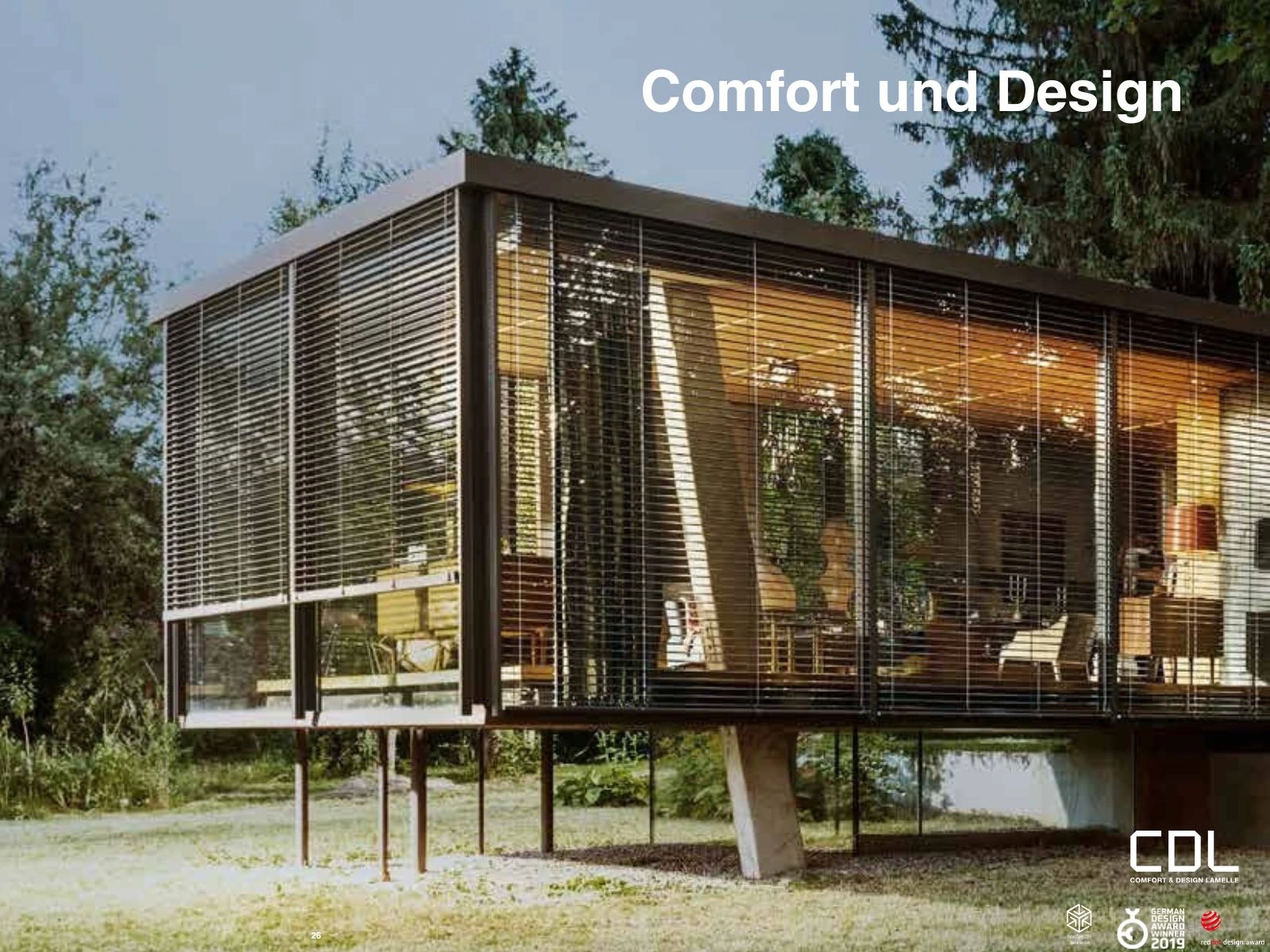
ROMA Raffstore on a modern glass facade. © ROMA / meylen.com
Tilt slats to bounce light onto the ceiling — natural illumination without direct glare or heat.
Angle slats for street privacy while keeping your view of the garden. Interior blinds cannot do this.
German standard for offices, Passivhaus, and luxury residential facades.
Smart motor adjusts slat angle automatically based on solar position and outdoor temperature.
Raffstore Slat Options
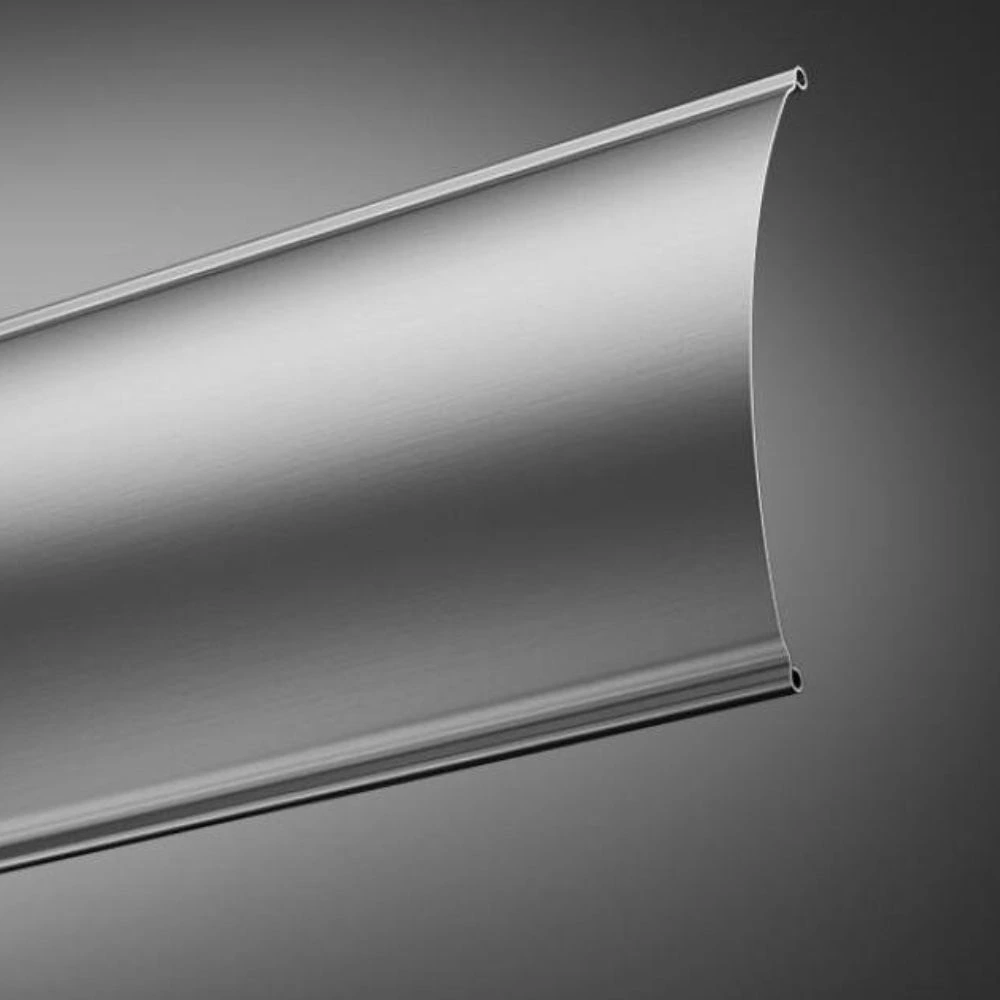
Flat aluminum slat, robust and cost-effective. Good daylight control for everyday residential use. Full ROMA color range available.
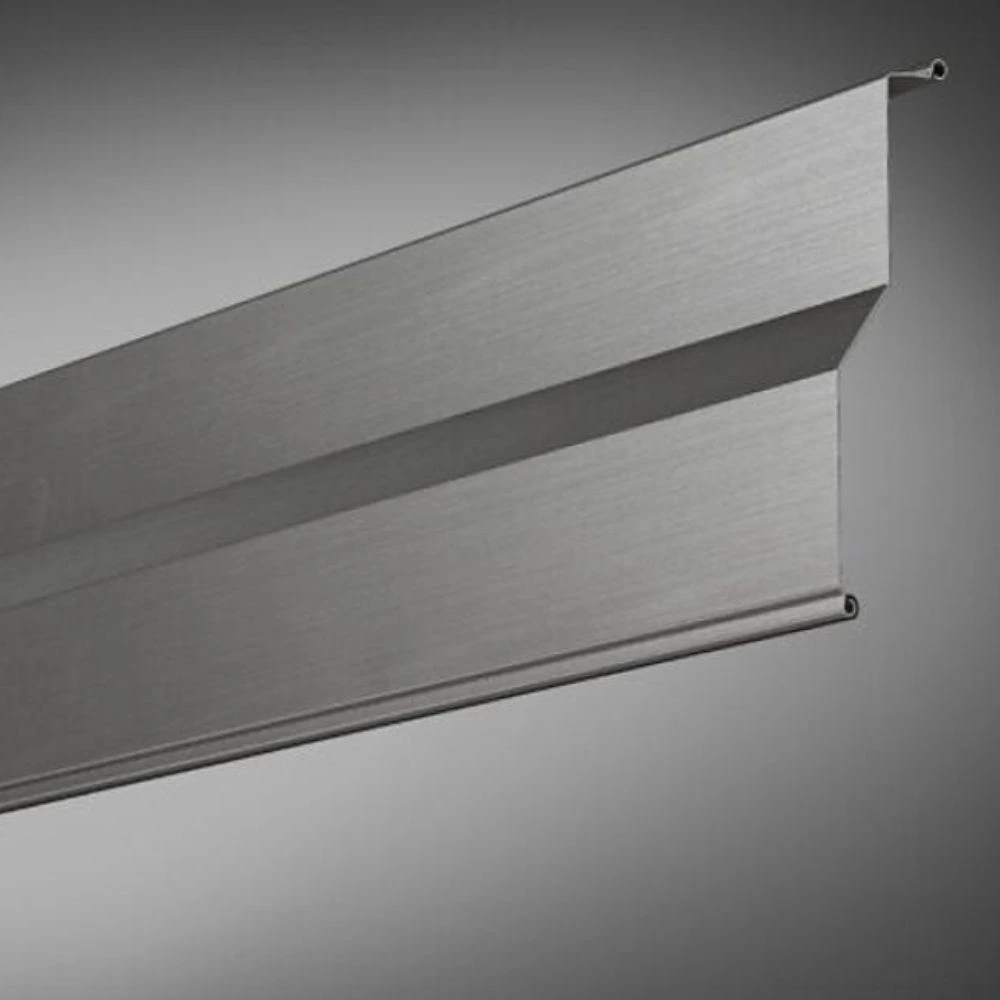
Beaded/crimped profile adds stiffness for better wind resistance. Slightly improved blackout over flat GL. The standard choice for most exterior installations.
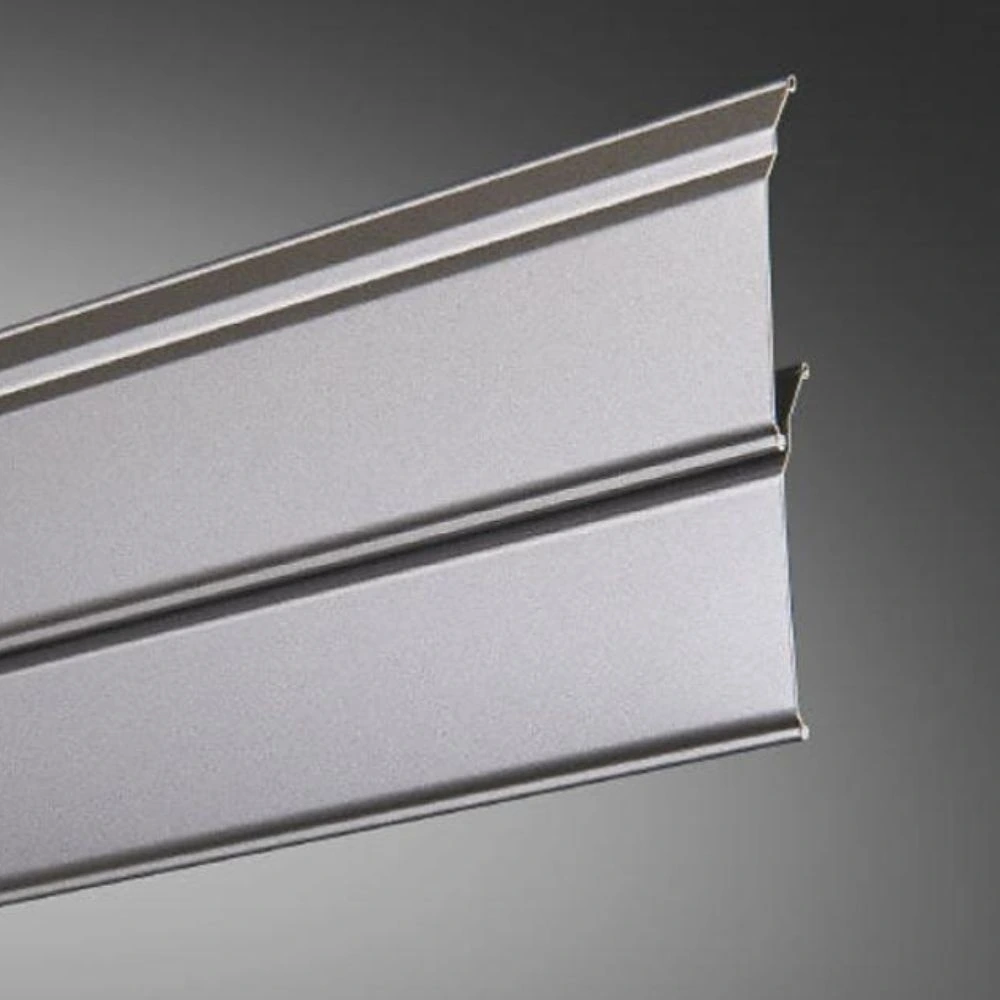
Comfort & Design slat: opaque, maximum wind stability, architecturally premium. Preferred for high-end residential facades, Passivhaus, and commercial curtain-wall projects.
⚠️Raffstore wind limits — plan for retraction
🪟 3. ZIP Screen — Textile Sun Screen
The ZIP screen (Textilscreen) is the newest and fastest-growing category in exterior shading — especially for terraces, large panoramic windows, and patio doors. A motorized roller shade uses a patented zipper-edge system that locks the fabric permanently into aluminum side rails. No flapping, no gaps, no blowout. The fabric itself is micro-perforated: from inside you see straight out; from outside you see nothing during daylight.
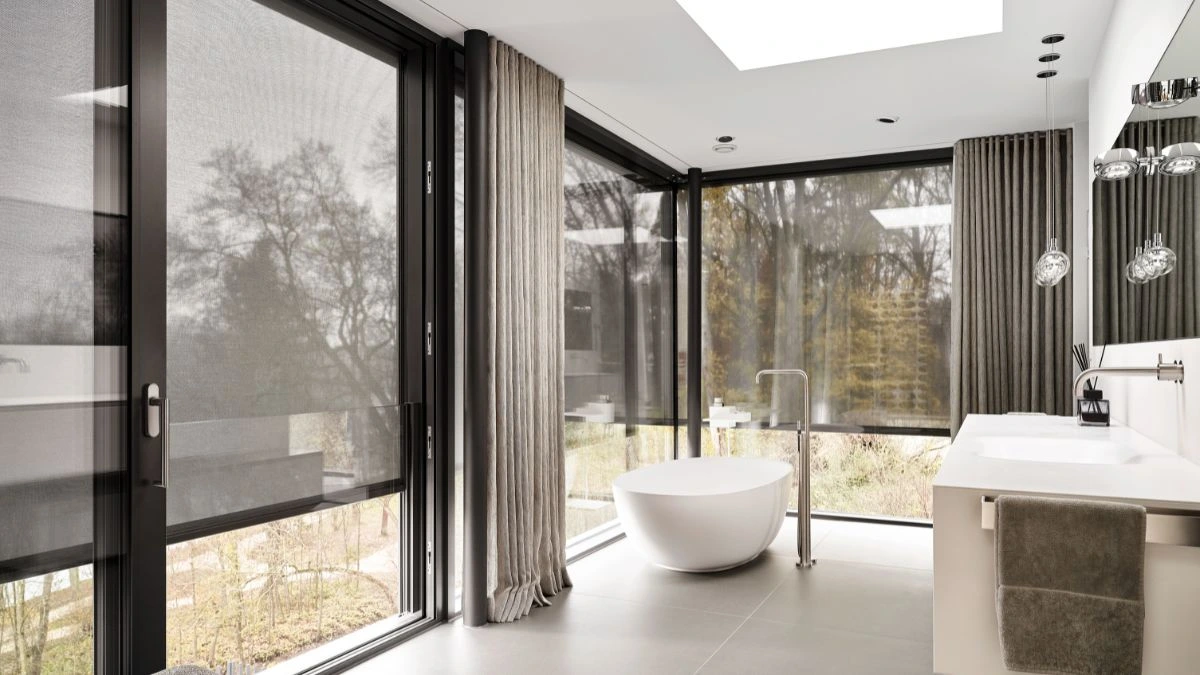
ROMA zipSCREEN on a floor-to-ceiling window — view-through fabric, zero wind gaps. © ROMA / meylen.com
Fabric slots into a continuous zipper rail — no flapping, no gaps, no blowout at any wind speed.
Zipper-locked fabric withstands winds that destroy conventional exterior roller shades.
Micro-perforated fabric: you see out clearly; neighbors cannot see in during daylight hours.
Protects hardwood floors, leather furniture, and artwork from UV fading.
The sealed ZIP perimeter also functions as an impenetrable mosquito barrier.
Chlorine-resistant, moisture-rated fabrics designed for outdoor living areas and pool decks.
ZIP Screen vs. interior blinds
💰 US Cost Guide: What to Budget
All prices below are fully installed costs in the US via meylen.com — custom-manufactured ROMA systems shipped from Germany, including international freight, US customs clearance, and installation. Price depends on window size, profile grade, box type, and motor choice.
| System | Small up to 4 sq ft | Standard window 4–12 sq ft | Large / patio door 12–30 sq ft |
|---|---|---|---|
| Rollladen (ALUMINO) | $600–$900 | $800–$2,000 | $1,800–$4,000 |
| Rollladen (ALUMINO protect) | $800–$1,100 | $1,000–$2,500 | $2,200–$5,000 |
| Raffstore (GL / Z slat) | $900–$1,300 | $1,200–$2,500 | $2,500–$5,500 |
| Raffstore (CDL premium) | $1,100–$1,600 | $1,500–$3,000 | $3,000–$6,500 |
| ZIP Screen | $700–$1,100 | $900–$1,800 | $1,800–$4,500 |
Prices include Vorbaukasten (front-mounted box), solar motor, international shipping, US customs, and installation. Choosing a solar motor avoids $200–$500/window in electrical labor vs. a hardwired motor.
Typical Project Budgets
📦 Box Systems: Vorbau vs. Aufsatz
The box houses the rolled-up shutter when it is retracted. For US homeowners, the choice is nearly always the Vorbaukasten (front-mounted) — it attaches to the facade with zero wall changes. The Aufsatzkasten (top-mounted, wall-integrated) is for new builds or full window replacements.
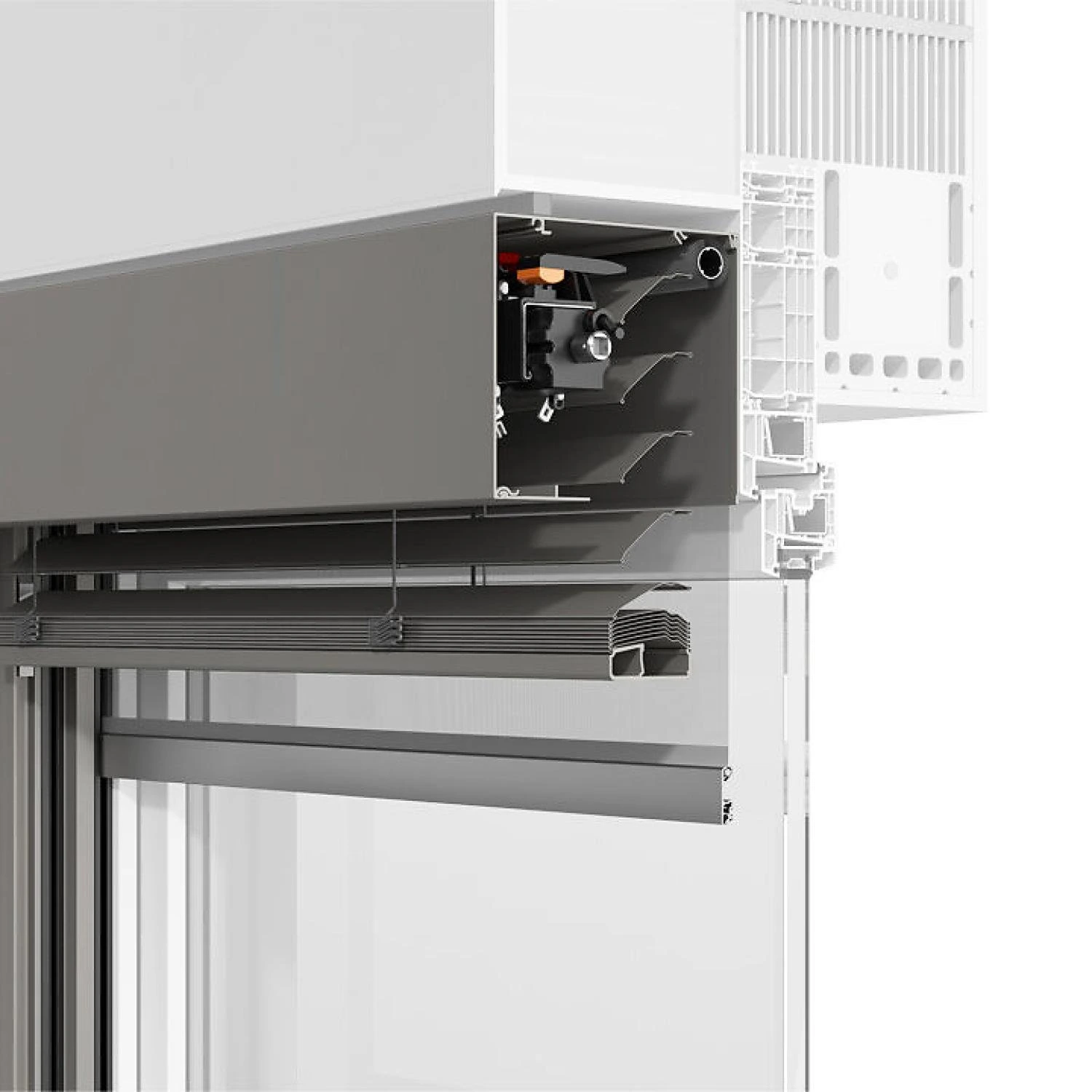
Attaches directly to the exterior facade or inside the window reveal. Zero structural changes, zero wall opening. The answer for virtually all American home retrofits — on vinyl siding, brick veneer, or HardiePlank.
- ✓ No wall penetration required
- ✓ No thermal bridges through wall assembly
- ✓ Install in hours per window
- ✓ Box shapes: RONDO (round), PENTO (angled), QUADRO (square)
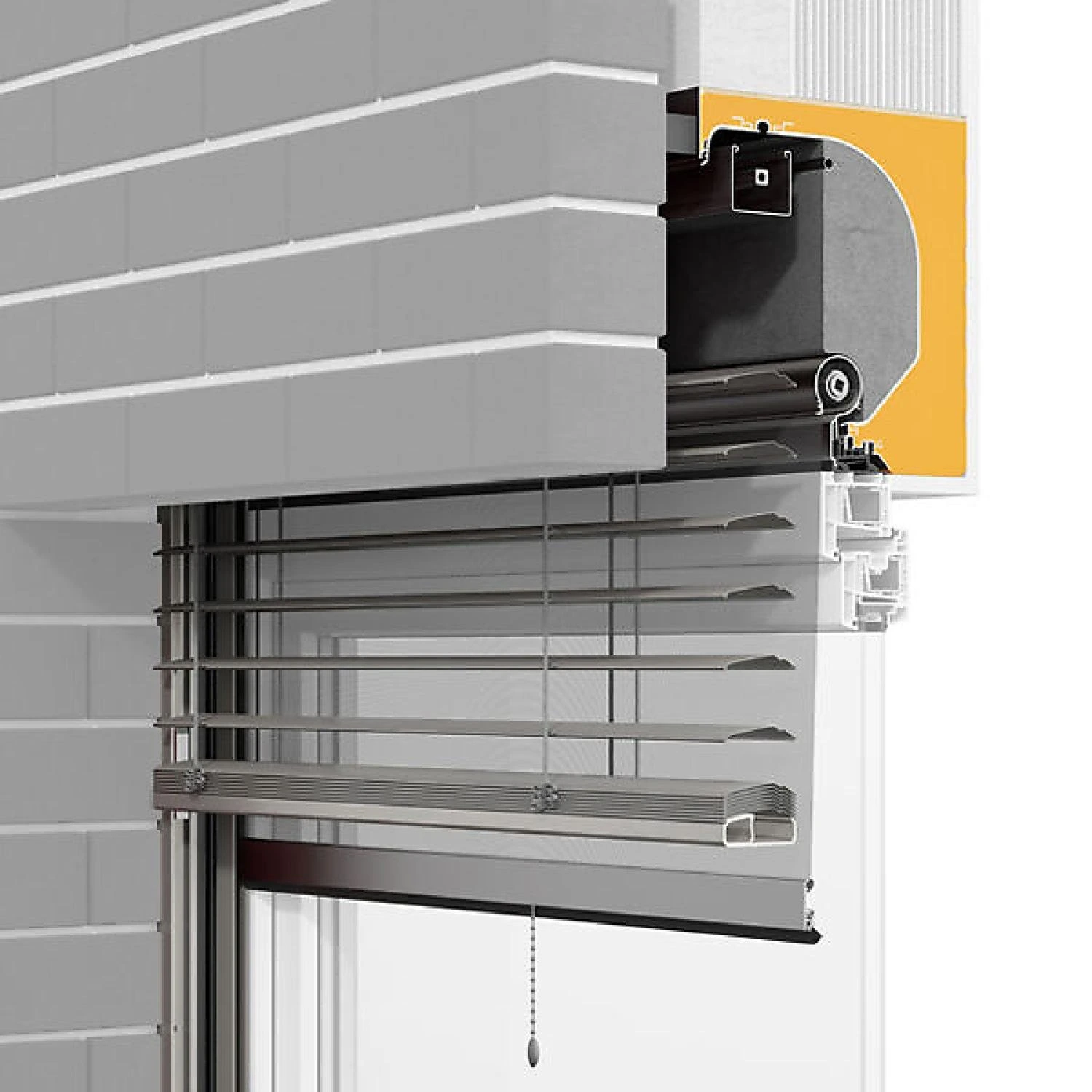
Integrates into the wall assembly above the window. On new builds, the box is plastered over — completely invisible from outside. Highest insulation values (Passive House rated). Requires window replacement or new construction.
- ✓ Zero visual impact (plastered flush with facade)
- ✓ Passive House-grade insulation values
- ✓ PURO (PU-foam, invisible) and KARO (PVC, serviceable) variants
- ✓ Requires full window replacement to retrofit
ℹ️US wood-frame houses: always specify Vorbaukasten
⚙️ Motorization: Solar vs. Hardwired
All ROMA systems via Meylen are motorized — manual strap operation is not offered in the US market. The key decision for retrofits is solar motor (no wiring) vs. hardwired 120V.
☀️ Solar Motor
Recommended for US- ✓ Zero wall drilling or electrical wiring
- ✓ Solar panel charges from diffuse daylight
- ✓ 30+ days reserve battery in total darkness
- ✓ Full smart home: HomeKit, Google, Alexa, Somfy TaHoma
- ✓ Single-day install per window
- ✗ Slightly higher motor unit cost
- ✗ Requires partial access to daylight for panel charging
🔌 Hardwired 120V Motor
New builds only- ✓ Marginally lower motor unit cost
- ✓ No battery management
- ✓ Ideal when running new electrical anyway (new build)
- ✗ Licensed electrician required
- ✗ +$200–$500/window in electrical labor
- ✗ Drywall patching after wire fishing
- ✗ Multi-day install disruption for retrofits
Smart home tip
💡 ROI: Do They Pay for Themselves?
US Department of Energy data shows exterior shading reduces air conditioning costs by 25–40%. In Sunbelt states where HVAC is 40–50% of electricity use, a home with 8–12 windows typically saves $400–$900 per year in cooling costs alone.
In Florida, hurricane-rated impact glass runs $1,500–$3,000/window. ALUMINO protect Rollladen at $1,000–$2,500 provide equal or better debris protection and daily cooling, blackout, and security benefits year-round.
Get These Systems in the US: meylen.com
Meylen is the authorized ROMA export and installation partner for North America. They manage the full process end-to-end: consultation, custom manufacturing in Germany, ocean or air freight, US customs clearance, and installation — either by your local contractor with Meylen's technical support, or by Meylen's own German crews.
Frequently Asked Questions
How much do German roller shutters (Rollladen) cost in the US?↓
A fully motorized aluminum Rollladen — front-mounted box, solar-powered motor, ROMA ALUMINO profile — typically costs $800–$2,000 per window fully installed in the US through Meylen. Larger windows (patio doors, floor-to-ceiling glass) can reach $2,500–$4,000 each. Storm-grade ALUMINO protect profiles run 20–25% more.
What is the difference between Rollladen, Raffstore, and ZIP screens?↓
Rollladen are solid-slat roller shutters: total blackout, maximum security, highest thermal insulation — best for bedrooms and storm zones. Raffstore are exterior venetian blinds with tiltable aluminum slats: block direct sun while bouncing diffuse light into the room — best for living areas and architectural glass. ZIP screens are motorized fabric shades with a zipper-locked edge system making them wind-resistant up to 75 mph: preserve the view while blocking 75–90% of solar heat — best for terraces and panoramic windows.
Can I add a Rollladen to my American house without opening the walls?↓
Yes. The Vorbaukasten (front-mounted box) is the standard US retrofit solution. The aluminum housing attaches directly to the exterior facade or inside the window reveal — zero structural changes, zero wall opening. With a solar-powered motor, there is no electrical wiring either. A full install for a standard window takes a few hours.
How much can exterior shutters reduce my AC bill?↓
US Department of Energy data shows exterior shading reduces air conditioning costs by 25–40%. In Sunbelt states where HVAC is 40–50% of electricity use, a home with 8–12 windows typically saves $400–$900 per year. At an average of ~$1,200 per window installed, the cooling-only payback is roughly 10–15 years — but storm protection (avoiding hurricane deductibles), extended HVAC life, and furniture UV protection significantly shorten the real ROI.
Which system is best for hurricane zones?↓
Aluminum Rollladen with ALUMINO protect profiles provide the strongest hurricane protection. Foam-filled aluminum slats withstand debris impact and wind pressure comparable to impact-rated windows, often at similar or lower cost. ZIP screens (rated to 75 mph via their zipper-locked edge) also perform well in high winds but do not offer the same debris-impact resistance as solid aluminum slats. Raffstore retract automatically via wind sensors and are not intended as storm shutters.