
External Venetian Blinds:
The Complete Guide to ROMA Raffstore
External venetian blinds do something no interior blind can: tilt their aluminum slats to redirect diffuse daylight deep into a room while completely blocking the direct solar angle. No glare on screens. No heat buildup. And you can still see outside. This is the exterior shading system that German architects have specified on every south-facing facade for decades.
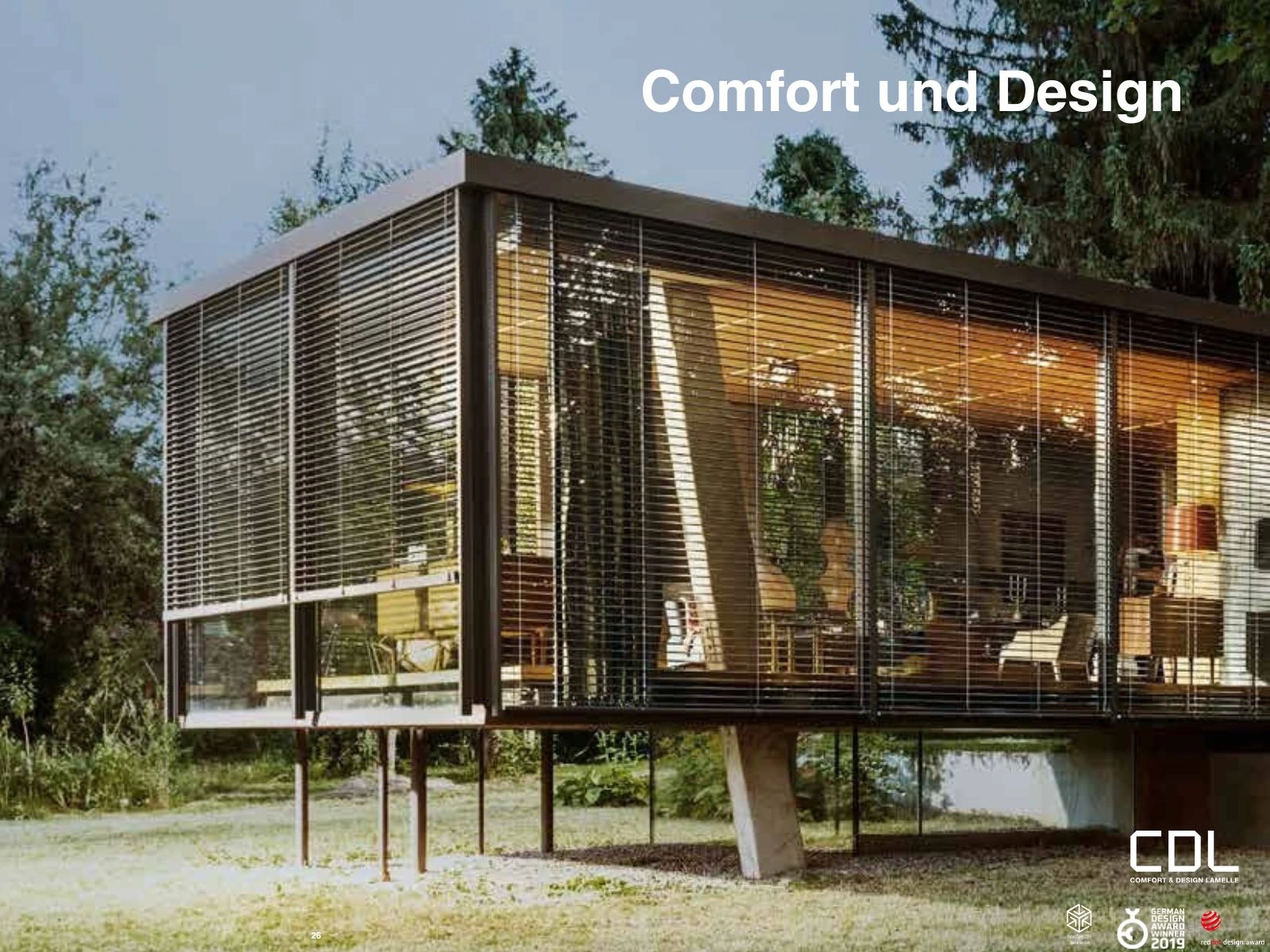
ROMA external venetian blinds — motorized tiltable aluminum slats. © ROMA / meylen.com
🛡️ Exterior Roller Shutters — when to use
- ✓ Bedrooms — full blackout for sleep
- ✓ Storm zones — debris and wind protection
- ✓ Ground-floor security — physical deterrent
- ✓ Maximum winter insulation
- Trade-off: binary (open or closed), no light control
🌤️ External Venetian Blinds — when to use
- ✓ Living rooms & kitchens — light without glare
- ✓ Home offices — eliminate screen glare
- ✓ Large architectural glazing & facades
- ✓ Anywhere view preservation matters
- Trade-off: wind limits (auto-retract at 35–50 mph), no full blackout
💡 How Daylight Steering Works
The defining feature of external venetian blinds is the ability to tilt each slat independently. This is not just “partially open” — it is precision light management.
Slats lie flat and horizontal. Full view, full daylight, no shading effect. Used on overcast days or north-facing windows where solar shading is not needed.
The working position. Slats tilted to block the direct solar angle for the current time of day, while reflecting diffuse skylight off the upper surface of the slats onto the ceiling — illuminating the room naturally without heat or glare.
Slats turn vertical. Maximum solar protection — blocks direct and most diffuse radiation. Provides significant privacy. Does not achieve 100% blackout (gap between slats remains), but close enough for daytime privacy.
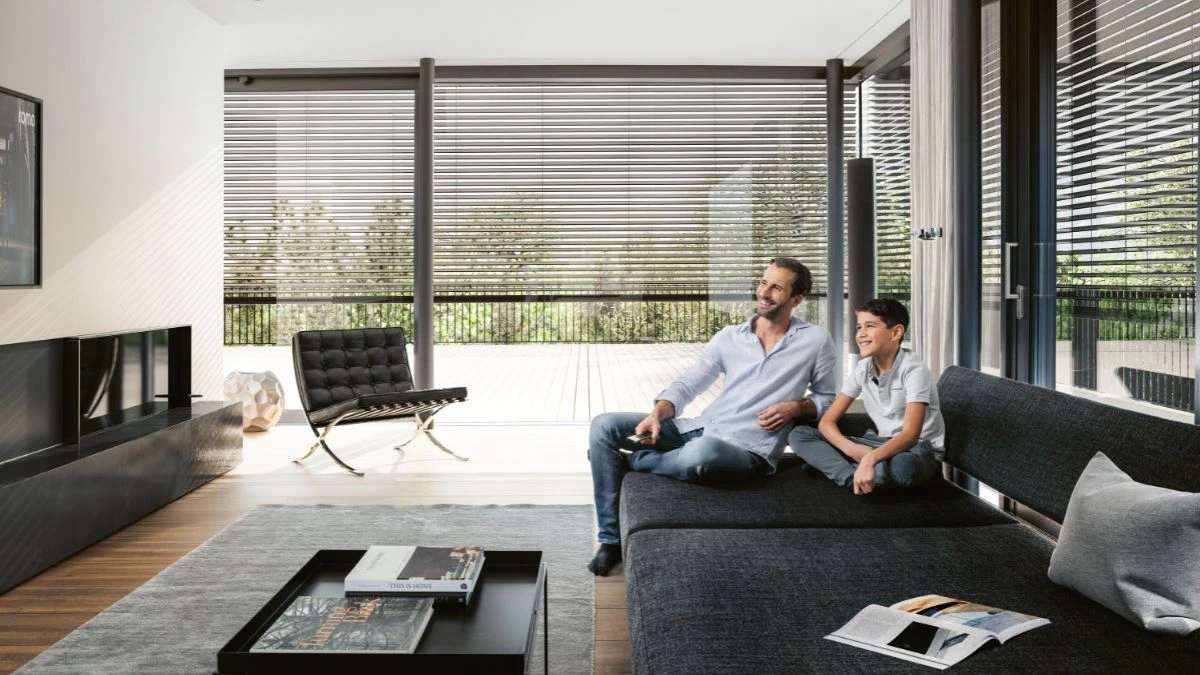
ROMA Raffstore on a commercial facade — slats at 45° daylight steering. © ROMA / meylen.com
The glare problem no interior blind solves
📐 ROMA Slat Profiles: GL vs Z vs CDL
ROMA produces three aluminum slat profiles for external venetian blinds. The choice affects wind resistance, blackout performance, daylight quality, and cost.
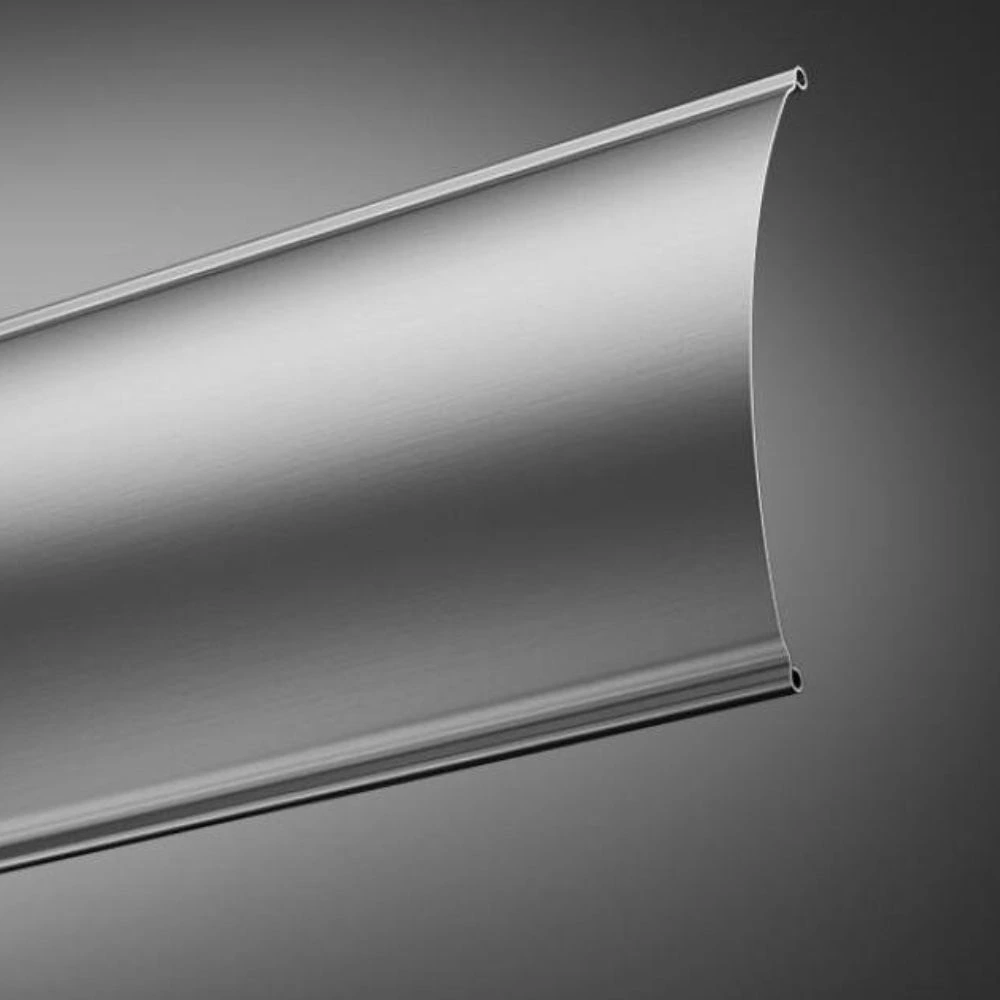
Flat aluminum profile in the classic venetian geometry. Robust and proven. Full ROMA color palette (200+ options). The most common choice for south and west-facing residential windows.
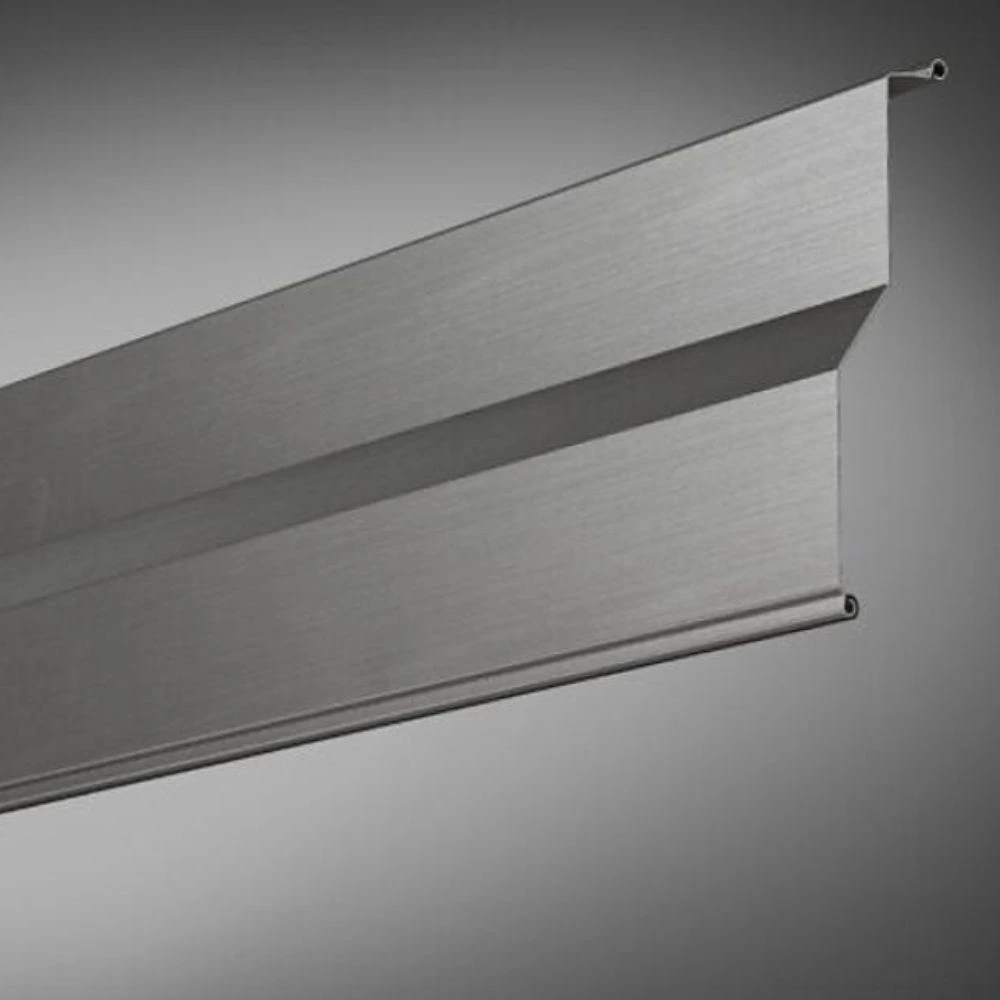
The crimp/bead geometry stiffens each slat without adding weight. Better wind resistance than GL, improved blackout due to slat overlap geometry. The standard upgrade for any exposed installation.
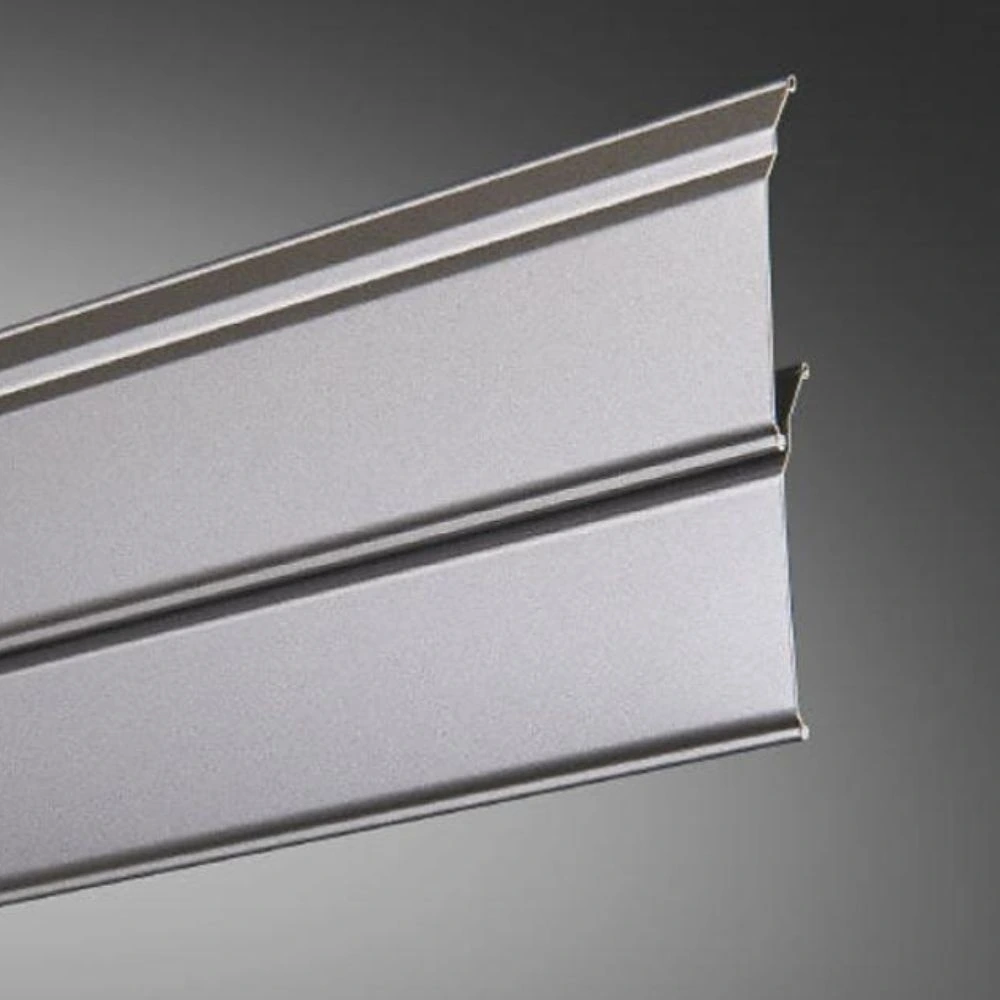
The Comfort & Design Lamelle: opaque, maximum structural rigidity, enclosed C-profile guidance eliminates flutter. The go-to for architects, commercial projects, and any installation where performance cannot be compromised.
| Feature | GL | Z | CDL |
|---|---|---|---|
| Slat geometry | Flat | Crimped/beaded | Curved enclosed |
| Side guidance | Cable | Cable or C-rail | C-profile enclosed |
| Wind stability | Good | Very good | Excellent |
| Solar blackout (90° closed) | ~75% | ~85% | ~90% |
| Daylight steering quality | Good | Good | Excellent |
| Slat flutter noise in wind | Some | Minimal | None |
| Typical use | Residential | Exposed residential | Offices, facades, Passivhaus |
| Relative cost | Base | +10–15% | +25–35% |
📦 Box Systems: Three Installation Types
The slat cassette (housing box) determines how the system mounts to your building. For US homeowners, the front-mounted box is the standard — no wall modifications required.
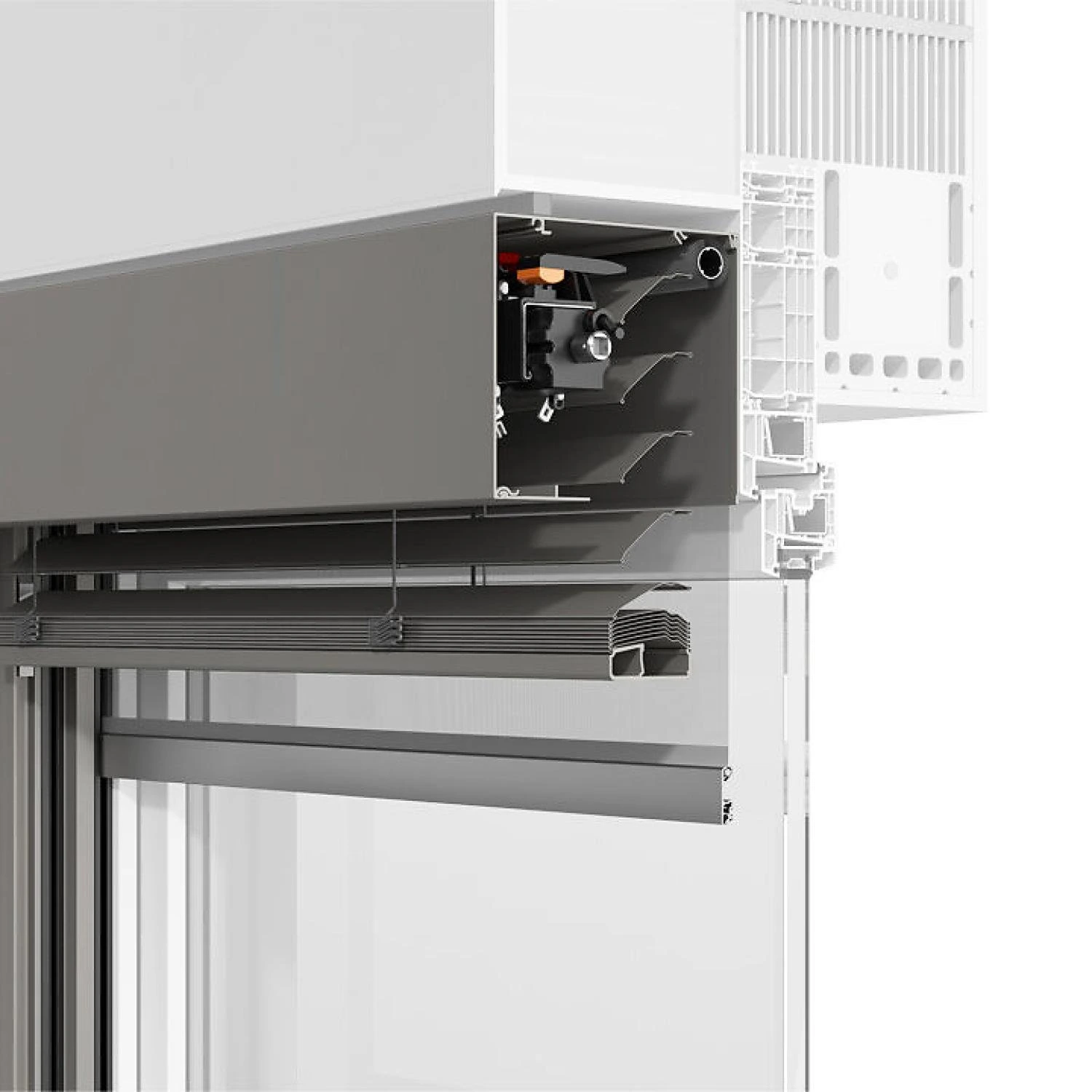
Attaches directly to the facade above the window — no wall opening, no structural changes. Available in square, round, or angled profiles. The right choice for virtually all US retrofits on wood-frame, brick, or HardiePlank homes.
- ✓ Zero wall penetration
- ✓ Installs on any facade type
- ✓ Box shape: square, round, or angled
- ✓ Works with solar or hardwired motor
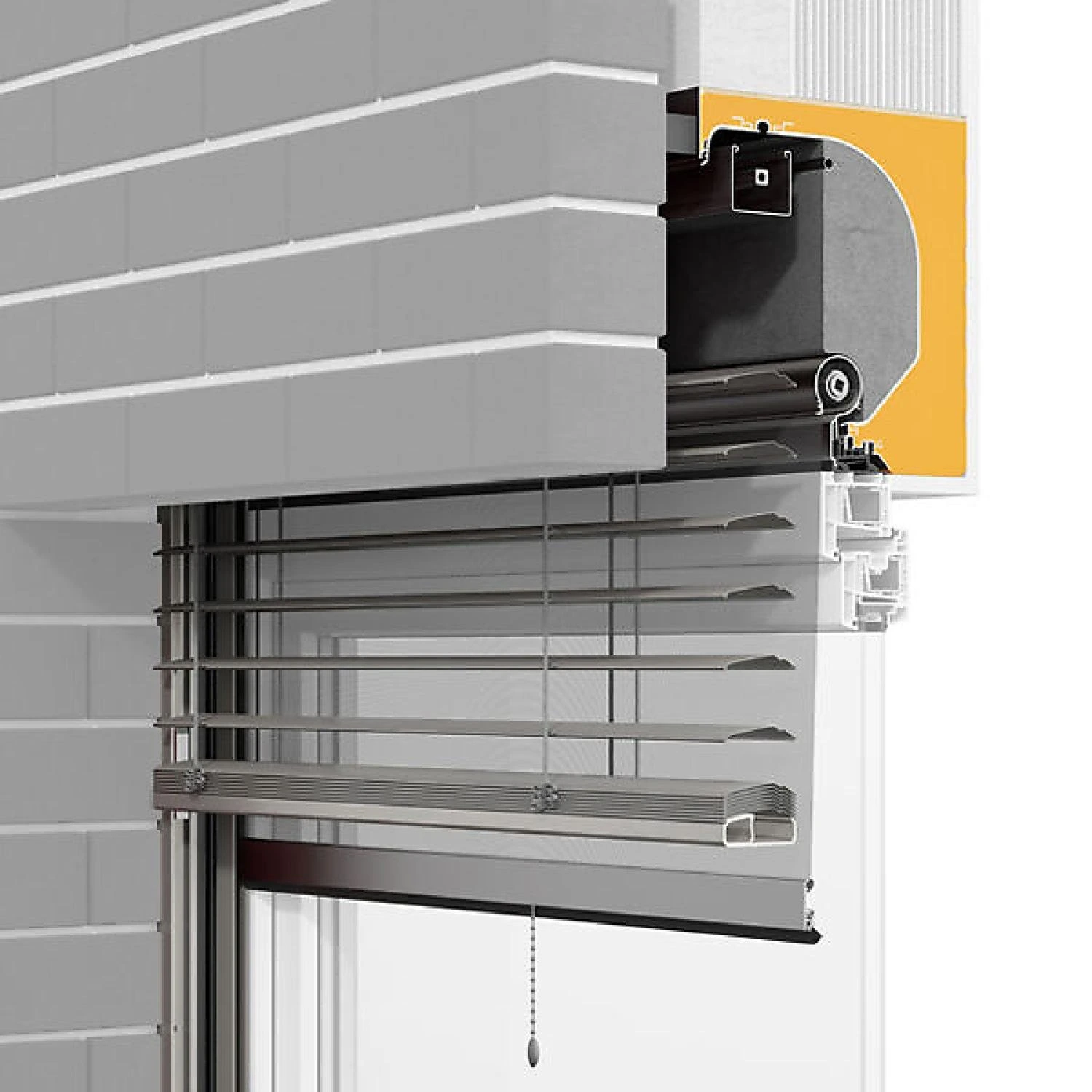
Integrated into the wall assembly above the window at construction phase. Completely invisible from outside — plastered or clad flush with the facade. The Passivhaus and new-construction standard in Germany.
- ✓ Fully concealed — zero visual impact
- ✓ Passive House thermal performance
- ✓ Requires window replacement or new build
- ✓ PURO foam or KARO PVC variants
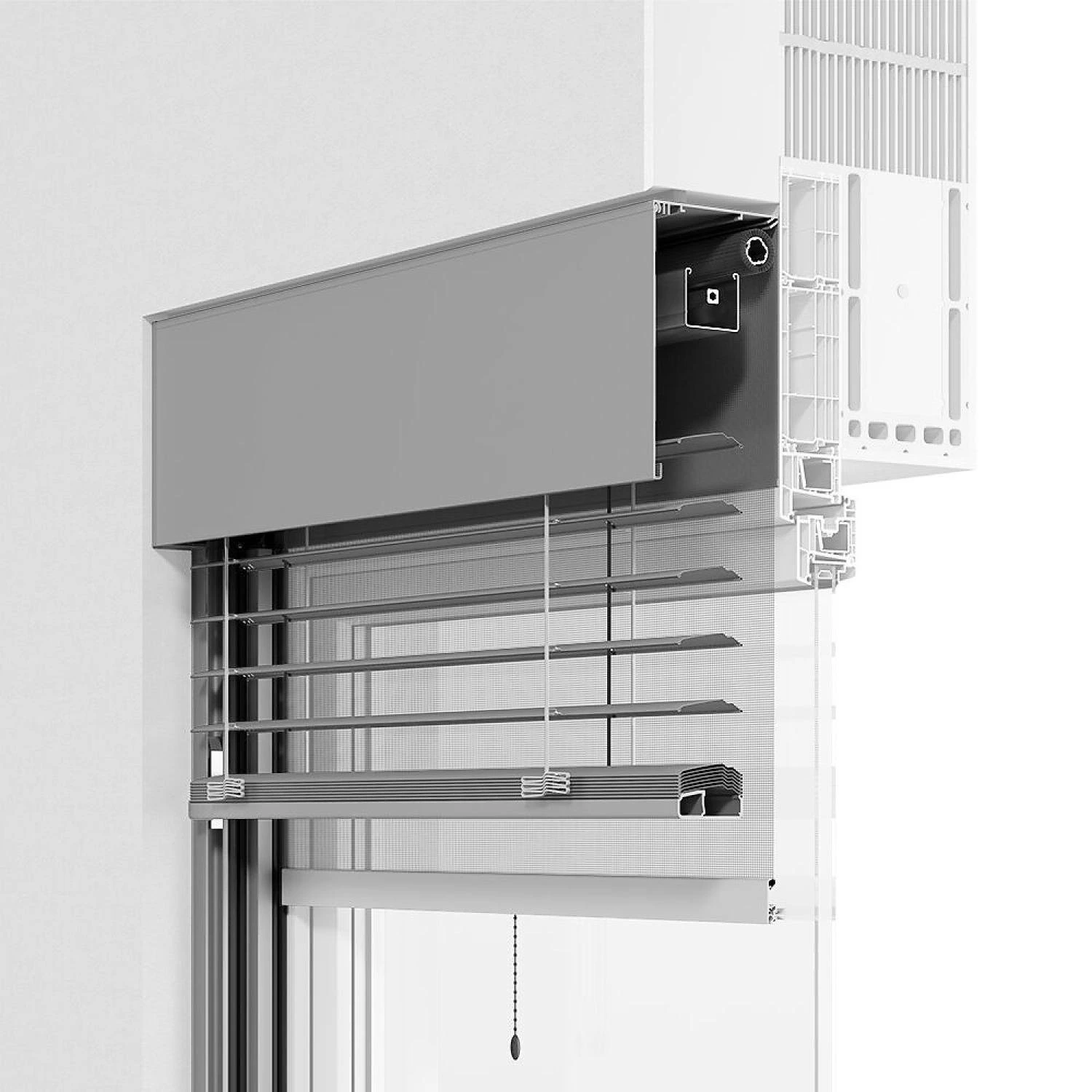
Pre-fabricated module units for repetitive commercial facades — office buildings, hotels, multi-family residential. Factory-assembled and craned into position. Fast installation for large-scale projects.
- ✓ Fastest install for multi-unit projects
- ✓ Consistent factory quality
- ✓ Engineered for curtain-wall integration
- ✓ Available in large panel widths
🌬️ Wind, Weather & Automatic Protection
Wind is the key design constraint for external venetian blinds. Unlike solid roller shutters, open slats present wind resistance — and high wind can damage the guidance cables or slats if the system is not retracted. ROMA solves this with automatic wind sensors.
Automatic wind retraction
A Somfy or Elero wind anemometer (typically mounted on the roof or a parapet) continuously measures wind speed. When gusts exceed the programmed threshold (usually 35–45 mph), all external venetian blinds on the affected facade automatically retract to the fully-open position — protecting slats and guidance cables.
- ✓ Sensor activates in under 2 seconds
- ✓ System re-lowers automatically when wind drops
- ✓ Threshold configurable per facade orientation
- ✓ Works even when home is unoccupied
Wind ratings by slat type
⚠️Not a substitute for storm protection
🏠 Where They Make the Most Difference
South-facing living rooms
The classic application. A west or south-facing living room with floor-to-ceiling glass becomes unusable at 3 PM in summer without exterior shading. External venetian blinds maintain a comfortable, glare-free environment while preserving the architectural openness of the space — something neither a roller shutter nor an interior blind can do.
Home offices & screen rooms
Screen glare is the enemy of productive work from home. External venetian blinds eliminate glare by blocking the direct solar angle before it reaches the glass. With a sun-tracking motor, slat angle adjusts automatically as the sun moves — no manual adjustment throughout the workday.
Large architectural glazing
Sliding glass walls, corner glazing, and curtain-wall windows cannot accommodate roller shutters without destroying the architectural intent. External venetian blinds mount discreetly on the facade and retract into a slim box — maintaining clean sightlines while delivering full solar control.
Passive House & high-performance buildings
In Passive House design, solar gain management is a core energy strategy. External venetian blinds allow the house to capture winter solar gains (slats open) while preventing overheating in summer (slats angled). Combined with triple-glazed windows and mechanical ventilation, they are standard in German Passive House construction.
East and west exposure
Low-angle morning and afternoon sun is the hardest to manage with interior blinds — it shines almost horizontally into rooms. Exterior slats at a steep angle intercept even low-angle sunlight while preserving the view upward. West-facing rooms are transformed in the late afternoon.
Privacy without darkness
External venetian blinds at 70–80° provide street-level privacy from neighbors and passing traffic while still letting in diffuse sky light. Interior occupants see out clearly (looking up past the slat angle); street-level observers see the angled slat faces. The German “privacy screen” that works in daylight.
💰 US Cost Guide
Prices via meylen.com — ROMA systems custom-manufactured in Germany, shipped and installed in the US. Includes front-mounted box, solar motor, US customs, and installation.
| System | Small up to 4 sq ft | Standard window 4–12 sq ft | Large / patio 12–30 sq ft |
|---|---|---|---|
| External venetian blind — GL slat | $900–$1,300 | $1,200–$2,500 | $2,500–$5,500 |
| External venetian blind — Z slat | $1,000–$1,400 | $1,300–$2,700 | $2,800–$6,000 |
| External venetian blind — CDL premium | $1,100–$1,600 | $1,500–$3,000 | $3,000–$6,500 |
CDL upgrade over GL is typically +25–35% per unit. Solar motor is included as standard in Meylen US quotes. Hardwired motor saves ~$50–$100/unit but adds $200–$500 in electrician costs per window.
🤖 Smart Home: Sun Tracking & Angle Control
External venetian blinds with io-homecontrol motors unlock a level of automation not possible with roller shutters: individual slat angle control, not just up/down position. A sun-tracking hub can adjust slat angle automatically throughout the day as the sun moves across the sky.
Somfy TaHoma with an integrated sun sensor calculates the exact solar elevation and azimuth angle based on your GPS coordinates and time of year. It adjusts slat angle automatically to maintain optimal shading — blocking direct sun while maximizing diffuse light admission. The room self-regulates throughout the day.
Link slat position to indoor temperature. If the room is already cool (morning), slats open for view and light. When the room hits a threshold temperature, slats automatically tilt to solar-blocking position. Works with any smart home thermostat.
Wind sensor triggers automatic retraction at your configured threshold (35–50 mph). System automatically re-deploys at the previous position when wind drops below threshold. No manual intervention.
Create a "Work" scene: external venetian blinds at 45° daylight steering, lights at 30%, AC at 72°F. One voice command or tap sets the full room environment. Compatible with HomeKit, Alexa, Google, Loxone, and KNX.
io-homecontrol is essential for angle control
🔧 Maintenance, Lifespan & Warranty
External venetian blinds require minimal upkeep. Annual cleaning and a check of the motor limits are the main tasks. Here is what to expect over the product lifecycle.
Rinse aluminum slats with a garden hose 1–2× per year. For built-up grime, use a soft brush with diluted pH-neutral detergent. Retract fully before cleaning. Do not use pressure washers or solvent-based cleaners — they strip powder coat.
Wipe guide channel tracks annually. Apply dry PTFE (Teflon) lubricant to side guides every 2–3 years — keeps operation smooth and quiet. Check bottom bar tension springs if slats start unspooling unevenly.
Once a year: verify the motor opens and closes to correct limits (slats fully raised and fully tilted). Re-program via the Somfy or Elero remote if limits drift. Solar motor: check panel for debris blockage that reduces charging.
| Component | Expected Lifespan | Replacement Cost | Warranty |
|---|---|---|---|
| Aluminum slats | 20–40 years | Slat replacement ~$80–150/window | 5 years (ROMA) |
| Tubular motor (hardwired) | 15–25 years | $120–$280 + labor | 5 years (Somfy/Elero) |
| Solar motor + battery | 10–15 years (battery cell) | $150–$350 + labor | 5 years (Somfy) |
| Bottom bar & tension springs | 10–20 years | $40–$120 | 2 years |
| Guide rails & box housing | 30–50 years | Rarely replaced | 10 years (ROMA) |
Get ROMA External Venetian Blinds in the US: meylen.com
Meylen is the authorized ROMA partner for North America. Consultation, manufacturing, shipping, customs, and installation — all managed end-to-end. They will advise on the right slat profile and box system for each window based on your orientation, wind exposure, and use case.
Frequently Asked Questions
What is the difference between an exterior roller shutter and external venetian blinds?↓
An exterior roller shutter (Rollladen) is binary: it is either fully open or fully closed, providing complete blackout and maximum storm protection. External venetian blinds (Raffstore) have tiltable aluminum slats that can be set to any angle — blocking direct glare and solar heat while still admitting diffuse natural light and preserving the view outside. Roller shutters are preferred for bedrooms, security, and storm zones. External venetian blinds are the standard choice for living rooms, offices, and any space where you want natural light without heat or glare.
Can external venetian blinds withstand wind?↓
Yes, with design limits. ROMA external venetian blinds use side rails with tensioned guide cables (or heavy-duty C-profile rails for CDL slats) to prevent slat flutter in wind. The CDL slat with enclosed guidance is the most wind-stable option for exposed locations. Most systems automatically retract via wind sensor when gusts exceed 35–50 mph. External venetian blinds are not designed as storm shutters and should be retracted before hurricane-force winds arrive.
How much do external venetian blinds cost in the US?↓
ROMA external venetian blinds installed in the US via meylen.com run $1,200–$3,000 per window depending on size, slat type, and motor. A standard window (4–12 sq ft) with GL or Z slats and a solar motor typically costs $1,200–$2,500. CDL premium slats or large architectural panels run $1,500–$6,500 per opening. A full 10-window installation typically costs $14,000–$28,000 all-in.
Can external venetian blinds control light precisely enough for office use?↓
Yes — this is precisely why external venetian blinds dominate German office construction. Slats can tilt to redirect diffuse daylight onto the ceiling (daylight steering), eliminating glare on screens while maintaining full natural illumination. With a sun-tracking motor, the slat angle adjusts automatically as the sun moves across the sky, maintaining optimal light levels throughout the day without manual adjustment.
Which ROMA slat profile should I choose?↓
For most residential applications, the GL slat is the practical choice — good daylight control, full color range, cost-effective. For wind-exposed locations (upper floors, coastal, open terrain), the Z slat adds rigidity. The CDL slat is the premium option for architecturally demanding projects, high-wind exposure, or where near-total blackout is needed alongside daylight control — it combines the best light steering with the highest structural stability. Meylen will recommend the right slat for your specific situation during consultation.