
Exterior Shutters: Energy Savings
& Full ROI Model
Exterior roller shutters block up to 90% of solar heat before it enters your home. Here is what that means in real dollars — by state, by home size, and across every savings category beyond just your electricity bill.
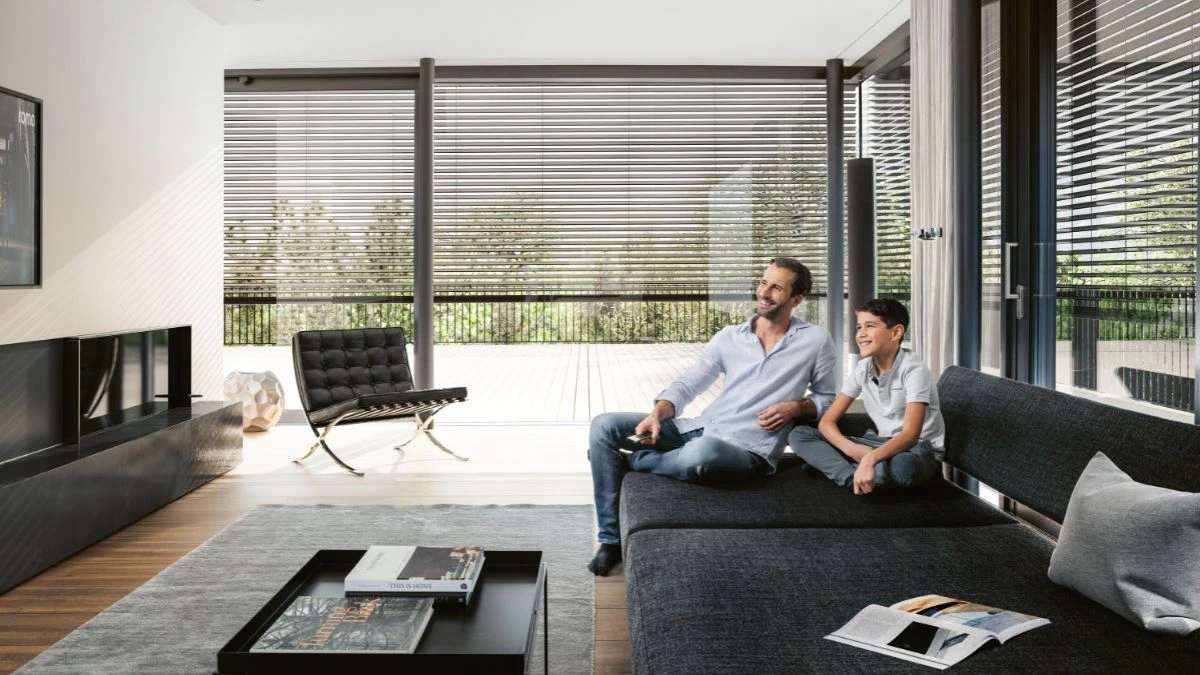
ROMA external venetian blinds — tilted to block direct solar radiation while admitting diffuse daylight. © ROMA / meylen.com
🌡️ Why Exterior Beats Interior: The Physics
Understanding why the savings are so large requires understanding what happens to sunlight when it hits a window.
🪟 Interior blind — too late
- 1.Short-wave solar radiation passes straight through the window glass
- 2.Sunlight hits the interior blind, which absorbs the energy and heats up
- 3.The hot blind radiates long-wave infrared heat into the room
- 4.Glass is opaque to long-wave radiation — the heat is trapped inside
- 5.AC must expend energy to remove the heat the blind just created
🏠 Exterior shutter — stops it at source
- 1.Exterior shutter intercepts short-wave radiation before it reaches the glass
- 2.Aluminum slats heat up — but they are outside the building envelope
- 3.Heat dissipates into outdoor air via convection — never enters the room
- 4.Window glass behind the shutter stays cool and shaded
- 5.AC load drops dramatically — compressor runs far fewer hours
ℹ️The 6× multiplier
🗺️ AC Savings by State (2026 Electricity Rates)
Annual cooling savings assume a 2,000–2,500 sq ft home with 8–12 windows, exterior roller shutters or external venetian blinds on all sun-facing exposures, and 25–40% reduction in the cooling energy component of the electricity bill. Electricity rates sourced from EIA data, June 2026.
| State / Region | Rate (¢/kWh) | Annual cooling cost | Annual AC savings | Cooling months | ROI grade |
|---|---|---|---|---|---|
Texas Long cooling season (Apr–Oct), AC is 50–70% of summer bill | 15.41¢ | $700–$1,100 | $175–$440 | 7 | A |
Arizona Highest solar irradiance in the US, longest cooling season | 16.03¢ | $1,100–$1,800 | $275–$720 | 8 | A+ |
Florida Year-round humidity load + hurricane protection value adds to ROI | 15.8¢ | $800–$1,300 | $200–$520 | 8 | A |
California (inland) Highest electricity rate in contiguous US — every kWh saved is worth double | 33.22¢ | $900–$1,500 | $225–$600 | 5 | A |
California (coastal) Mild climate limits cooling savings, but high rate amplifies any reduction | 33.22¢ | $200–$500 | $50–$200 | 3 | B |
Nevada Las Vegas receives more sun than nearly anywhere in the US | 14.38¢ | $900–$1,400 | $225–$560 | 7 | A |
Georgia / Carolinas Moderate cooling season; winter savings from insulation effect add up | 14.13¢ | $500–$900 | $125–$360 | 5 | B+ |
New York / Northeast Short cooling season, but high rate and significant winter insulation value | 29.99¢ | $200–$450 | $50–$180 | 3 | B |
Savings range = 25–40% of estimated annual cooling costs. Cooling cost estimate based on home size, local rate, and typical HVAC usage patterns for each climate.
California: the rate multiplier
📊 The Full ROI Model: Five Savings Categories
Cooling savings are real, but they are the smallest part of the financial case. Here is every category where exterior shutters return money.
25–40% reduction in the cooling portion of your electricity bill. Most significant in Arizona, Nevada, and Texas where AC accounts for 50–70% of summer bills.
Your AC compressor runs 30–40% fewer hours each summer. A central AC unit with a 12–15 year lifespan gets 3–5 more years of life. A $12,000 replacement delayed by 4 years is worth $800–$1,200 in present value — roughly $200–$300/year.
A closed exterior roller shutter creates a stagnant air cushion between shutter and glass, improving the window's thermal resistance (U-value) by approximately 20%. On a 2,000 sq ft home with 12 windows in a cold climate (New England, Midwest), this translates to 8–15% lower heating bills.
UV radiation fades hardwood floors, leather furniture, rugs, and artwork. A hardwood floor refinish costs $2,000–$5,000 and is typically needed every 5–8 years without UV protection. With exterior shutters blocking UV during peak sun hours, refinishing intervals extend to 10–15 years.
Complete blackout in bedrooms has documented sleep quality benefits. Burglary deterrence (closed shutters signal occupancy uncertainty) reduces risk. These do not appear on a utility bill but are reasons German homeowners cite as primary motivators for the system.
🧮 Payback Scenarios: Real Homes, Real Numbers
The following scenarios use conservative mid-range estimates for installation cost and all five savings categories above.
🌵 Phoenix, AZ
Highest AC savings in the US. 10-month cooling season.
🌴 Austin, TX
7-month cooling season. Long, hot summers compound AC savings.
🌁 Los Angeles, CA
Mild climate limits AC savings, but 33¢/kWh rate amplifies every kWh saved.
Note on methodology: These payback estimates use conservative mid-range savings figures and mid-range installation costs via meylen.com (ROMA systems, solar motors, US installation included). The scenarios do not include potential Florida hurricane insurance discounts, which can add $200–$600/year and compress payback by 3–6 years in South Florida.
📅 The 30-Year View
Exterior roller shutters have a lifespan of 30–50 years with minimal maintenance. Interior blinds last 5–10 years and need replacement. That changes the comparison significantly.
| Interior blinds (quality) | Exterior roller shutters | |
|---|---|---|
| Product lifespan | 5–10 years | 30–50 years |
| 30-yr replacement cost (10 windows) | $3,000–$8,000 | $0 (one install) |
| Solar heat blocked | ~15% | ~90% |
| Blackout capability | Partial (light bleed at edges) | 100% (interlocking slats) |
| Winter insulation effect | None | +20% U-value |
| UV furniture protection | Minimal | Full when lowered |
| Security function | None | 3–8 min forced-entry resistance |
| 30-yr energy savings (TX avg) | $0 | $7,500–$13,000 |
| 30-yr net cost (install − savings) | $3,000–$8,000 (cost only) | Net positive after yr 11–16 |
The electricity rate trend
🛒 Getting an Accurate Savings Estimate
The state-level numbers above are averages. Your actual ROI depends on window orientation, shading obstructions, local electricity rate tier, and which system you install. Here is how to turn the estimate into a real number.
South and west-facing windows deliver the highest ROI — they receive direct afternoon sun from May through September. North-facing windows gain almost nothing from exterior shading. East windows benefit for morning sun but less than south/west. Focus your budget where the sun load is highest.
Ask installers to quote the same product: e.g. "ROMA ALUMINO profile, Vorbaukasten, Somfy io motor per window." This makes quotes comparable. A quote for an unnamed "exterior shutter with motor" is unquotable — the product range runs from $400 to $2,800 per window.
A good installer will give you a savings breakdown per window based on orientation, size, and your electricity rate. If they cannot do this, they do not understand the product well enough. Meylen (meylen.com) builds this projection as part of the free consultation.
Pull your last 12 months of utility bills and calculate average cents/kWh including all fees and taxes. The residential rate on your bill is often lower than the effective rate once delivery charges are included. The real number is what matters for your payback calculation.
Calculate Your Savings: Get a Quote from meylen.com
Your actual savings depend on your home's orientation, window count, local climate, and electricity rate. Meylen can build a site-specific projection during the free consultation — including which windows deliver the highest ROI and which shutter system (roller shutter vs external venetian blind vs ZIP screen) is most appropriate for each exposure.
Frequently Asked Questions
How much can exterior shutters reduce my electricity bill?↓
DOE-backed research shows exterior shading reduces whole-home summertime cooling costs by 15–25%, with some climate studies showing up to 40% for homes in high solar radiation zones. In practice, a typical Texas home (2,000 sq ft) saves $250–$450/year on cooling. An Arizona home with a longer cooling season saves $400–$750/year. California coastal homes save less on cooling but significantly more per kWh due to rates of 33¢/kWh.
How long is the payback period for exterior roller shutters?↓
Cooling-only payback for a 10-window Texas home runs 18–35 years. However, the full ROI model including extended HVAC lifespan (2–4 extra years = $2,000–$4,500 value), winter insulation savings (8–15% on heating), furniture UV protection (avoids $2,000–$5,000 in floor refinishing over 20 years), and sleep quality improvement shortens the real-world payback to 8–15 years. In Florida and California, rising electricity rates and potential hurricane protection value compress payback further.
Do exterior shutters also save energy in winter?↓
Yes. A closed exterior roller shutter creates a stagnant air cushion between the shutter and the window glass, improving the window's effective U-value by approximately 20%. Over a heating season, this typically reduces heating costs by 8–15%, depending on climate zone and window quality. The effect is most significant on single-pane or older double-pane windows.
Why does exterior shading save so much more than interior blinds?↓
It is a physics problem. Window glass is transparent to short-wave solar radiation — sunlight passes straight through. Once it hits an interior blind or curtain, the blind absorbs the energy, heats up, and radiates that heat directly into your room as long-wave infrared. Your air conditioner must then remove that heat. An exterior shutter stops the short-wave radiation before it touches the glass. The shutter heats up outside, but that heat dissipates into the outdoor air. Exterior shading blocks up to 90% of solar heat gain. Interior blinds block roughly 15%.
Which US states benefit most from exterior shutters?↓
States with the best energy ROI combine high solar irradiance, long cooling seasons, and high electricity rates. Arizona (Phoenix), Nevada (Las Vegas), and California (inland) offer the most compelling ROI from AC savings alone. Texas combines high solar load with a long cooling season. California coastal areas have lower AC usage but the nation's highest electricity rates (33¢/kWh in 2026), making even modest savings highly valuable. Florida's ROI is boosted by potential hurricane protection and insurance benefits.